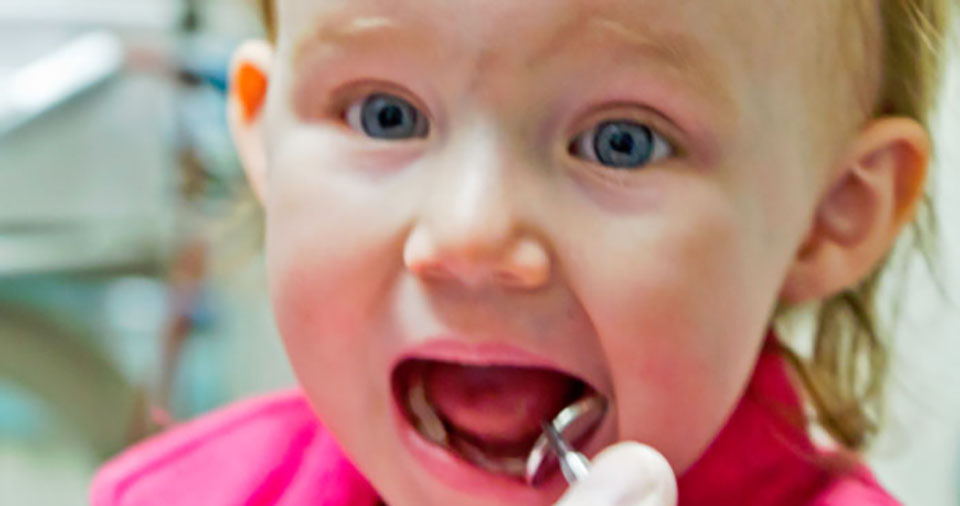
Welcome to the new class divide: good dental care, or the lack thereof.
Any parent who has taken their son or daughter to their six-month checkup (while desperately praying their child won’t need braces or other expensive procedures) knows the bitter truth. Here in America, access to good dental care is a form of privilege. During the 2008 recession, my husband got laid off and we had no insurance. We live in California and were grateful that at least our daughter had dental care though MediCal. But the coverage was barebones and every visit gave me nightmares. What if she gets cavities and we can’t afford the “tooth-colored” fillings?
All the poking, prodding, scraping, and drilling, is bad enough. But the worst part about dental care is the way they make you feel guilty and ashamed when they find anything wrong with your teeth. And, of course they always find something wrong with your teeth. After all, that’s how they make their money.
Did your dentist find a new cavity? Does your child need braces? Do you need a root canal? Chances are, your dentist read you the riot act about dental hygiene, flossing, and how you and your kids don’t come in enough. Never mind that you were out of work for two years and had to wait for your new job’s dental care plan to kick in. Never mind that dentists often don’t take Medicare/Medicaid or offer discounts or payment plans. They’ll still shame you for not taking good enough care of “your smile.”
Eight teeth
Welcome to the new class divide: good dental care, or the lack thereof. A study of 6,000 people across all ages and regions of the U.K. made an astonishing finding. It turns out the most stark and dramatic visual difference between rich people and poor people consists of… Eight teeth.
The poorest people in the UK have up to eight fewer teeth than the richest people by the time they are 70, according to the results of a study released in the Journal of Dental Health today.
Oh, you’re thinking. That’s in the U.K. where everyone’s teeth look terrible, even famous people like John Oliver’s. So what’s the big deal?
But it’s a huge problem in the good old US of A, too. Those Brits’ teeth may not look as creepily white, straight, and gleaming as ours. But at least their health care system ensures people receive basic care. That way, dental issues don’t get so severe they impact your overall health. Over here, when your non-access to dental care becomes visible — in the form of crooked, discolored, or missing teeth — you’re screwed. Back in the 20th century, making it into the middle class meant being able to afford a single-family home with a car in the garage. Nowadays, those things are barely — if at all — within reach for many of us. But we can still keep up appearances as long as we’ve got decent-looking teeth.
Dental care is a form of privilege
In a searing personal essay, The Shame of Poor Teeth in a Rich World, Sarah Smarsh conjures up painful memories of childhood poverty and bad teeth.
“If you have a mouthful of teeth shaped by a childhood in poverty, don’t go knocking on the door of American privilege.”
Smarsh relates to the snaggle-toothed character Pennsatucky from Orange is the New Black, but explains that you don’t need to get hooked on meth to have teeth like that. Smarsh’s family has been dentistry-challenged for generations:
“But Pennsatucky’s teeth aren’t just ‘meth teeth.’ They are the teeth of poor folk, of the young grandma who helped to raise me and for decades worked from diner to factory line to a desk job as a probation officer for the county court system in Wichita, Kansas.”
She recalls her Grandma as a vivacious “radiant thing” attracting flirtatious comments from the guys. . . until bedtime, when her teeth came out. Grandma explained that a dentist pulled out all her teeth and gave her a set of dentures when she was still in her twenties.
“I had bad teeth all my life. They were straight and looked OK, but I always had toothaches.”
Likewise, Smarsh’s handsome father’s teeth looked fine when he was younger. Alas, his lack of access to dental care caused his health to deteriorate as he aged. At one point, he mentioned, “I notice people’s teeth because mine are so bad.” Then, his dental health got so bad, his bad teeth didn’t just make him look less attractive… They nearly killed him.
“About a decade ago, at the age of 50, my dad almost died when infection from an abscessed tooth poisoned his blood and nearly stopped his heart. He has never had dental insurance and has seen a dentist only a handful of times when some malady became unbearable.”
Smarsh angrily rails against a system that denies quality dental care to the poor, while punishing and ridiculing them for their bad teeth.
“My family’s distress over our teeth – what food might hurt or save them, whether having them pulled was a mistake – reveals the psychological hell of having poor teeth in a rich, capitalist country: the underprivileged are priced out of the dental-treatment system yet perversely held responsible for their dental condition.”
That’s right. People with bad teeth are constantly held up to ridicule. Check out the People of Walmart website. Or think about the constant hillbilly tropes and redneck stereotypes on TV. In an interview with the actress who plays Pennsatucky, the ABC host chirps:
“Don’t get fooled by those mangled teeth she sports on camera! ‘Taryn Manning is one beautiful and talented actress.”
Because Manning can’t possibly be called “beautiful” or “talented” if she really had teeth like Pennsatucky’s.
Smarsh also astutely draws the connection between using shame to keep struggling people down, defunding the programs that could help them… And then saying these public institutions don’t work and we need to privatize them.
It’s a familiar trick in the privatization-happy US – like, say, underfunding public education and then criticizing the institution for struggling. Often, bad teeth are blamed solely on the habits and choices of their owners, and for the poor therein lies an undue shaming.
Poor people don’t have bad teeth because they’re lazy or choose an immoral lifestyle. They have bad teeth because they can’t afford to pay the dentist.
Lack of dental care keeps people from getting jobs
And here’s the cruel irony. Lack of dental care due to poverty can bar people from future employment. Back in May, 2013, NBC News reported on how lack of dental care keeps untold numbers of unemployed Americans from finding jobs. That explains why over 2,000 desperate people showed up one day at 5:30 a.m. for a free dental clinic in San Jose, CA. Among them was 53-year-old Patty Kennedy, who explained that she was hoping to boost her employment prospects:
“I’d love to work at a grocery store as a cashier. I’d even go for bagger. I’d do whatever.”
But Kennedy also realizes her crooked, discolored teeth could be a turnoff for customers.
“I really don’t smile a lot. I know that when you have a job, you want to have a pleasant attitude and you’ve got to smile and be friendly.”
Lindsey Robinson, a dentist and then-president of the California Dental Association agrees. Job prospects truly are dim for people with bad teeth:
“If they have a job that requires them to interact socially with the public, it’s almost impossible for them to get that job. Customer service jobs, good entry-level jobs, they’re not available to people who lack the basic ability to smile, to function, to chew properly.”
In 2012, the CDA provided $2.8 million in free dental care to nearly 4,000 people in the state of California. Yep, that’s a whopping $7,000 worth of dental care per person.
It’s not just the visual aspect of bad teeth that keeps people from working. Acute dental conditions also cause people to miss work at a rate of two days a year per 100 people in the U.S. More than 47 million people lack steady access to dental care, according to the Federal Health Resources and Services Administration (HRSA). A 2008 Kaiser Family Foundation study adds that low-income adults were nearly twice as likely to have gone without dental care for a year or longer.
Your dental insurance won’t go very far
Even those of us lucky enough to have dental insurance can have a hard time paying for the dentist. Even the “best” insurance plans cap their coverage at $1500-$2,000 per year, and that doesn’t go very far. According to the New York Times, even the basics add up quickly.
“According to 2013 data from the American Dental Association, which surveyed private dentists, the average cost of a basic examination is about $45, while a cleaning is $85. X-rays are another $27; a tooth-colored filling is $149, while a silver filling is about $125. Costs vary widely, however, depending on the market.”
Meanwhile, crowns cost $2,000, implants cost $4,000, root canals go for $500-$1,000, and the cost of braces averages at $5,600. At these prices, even people with good jobs may be delaying their dentistry until they can afford it. If they can ever afford it. Unfortunately, Obamacare hasn’t helped, because only children’s dental care is covered by the ACA.
Why your dental insurance (if you have any) sucks
So why does dental insurance suck so badly? Because insurance companies have not been able to figure out a way to make a profit by providing it.
The millions of Americans who go without dental care serves as a valid argument for why for-profit companies should not be involved in providing basic healthcare services. According to Families USA:
“Nearly 49 million people in the United States have trouble finding a dental provider [… and] 45 million had no dental insurance at all.”
Thomas P. Connelly, D.D.S., a practicing dentist in New York City, writes in the Huffington Post that dental care is hard to insure successfully, because it’s expensive to provide and is labor intensive. With standard, inexpensive preventative care, most of us can go for years without having any serious injuries, illnesses, or other conditions that require expensive treatment from our doctors or the hospital. That means insurance companies have enough left from our premiums (at least theoretically) to cover the seriously sick and injured.
Alas, the same is not true for dentistry. Despite all the stuff your dentist and hygienist say to make you feel guilty and spend more, guess what? Regular brushing, flossing, and teeth cleanings do not guarantee you won’t still need fillings, orthodontia, root canals, gum surgery, and other expensive work down the road. And, to make things worse, dentistry can often prove so painful, time-consuming, and expensive that people who have no leeway for unpleasant surprises emotionally, time-wise, or money-wise, often wind up avoiding the dentist for years. And you’d be amazed by what can happen in your mouth after years of not seeing the dentist.
Featured image: CC By-SA 3.0 2011 Dave Buchwald via Wikipedia.
A version of this post appeared in If You Only News, a news and politics blog that shuttered in 2017. It was shared 13,531 times on social media and was viewed over 30,000 times.